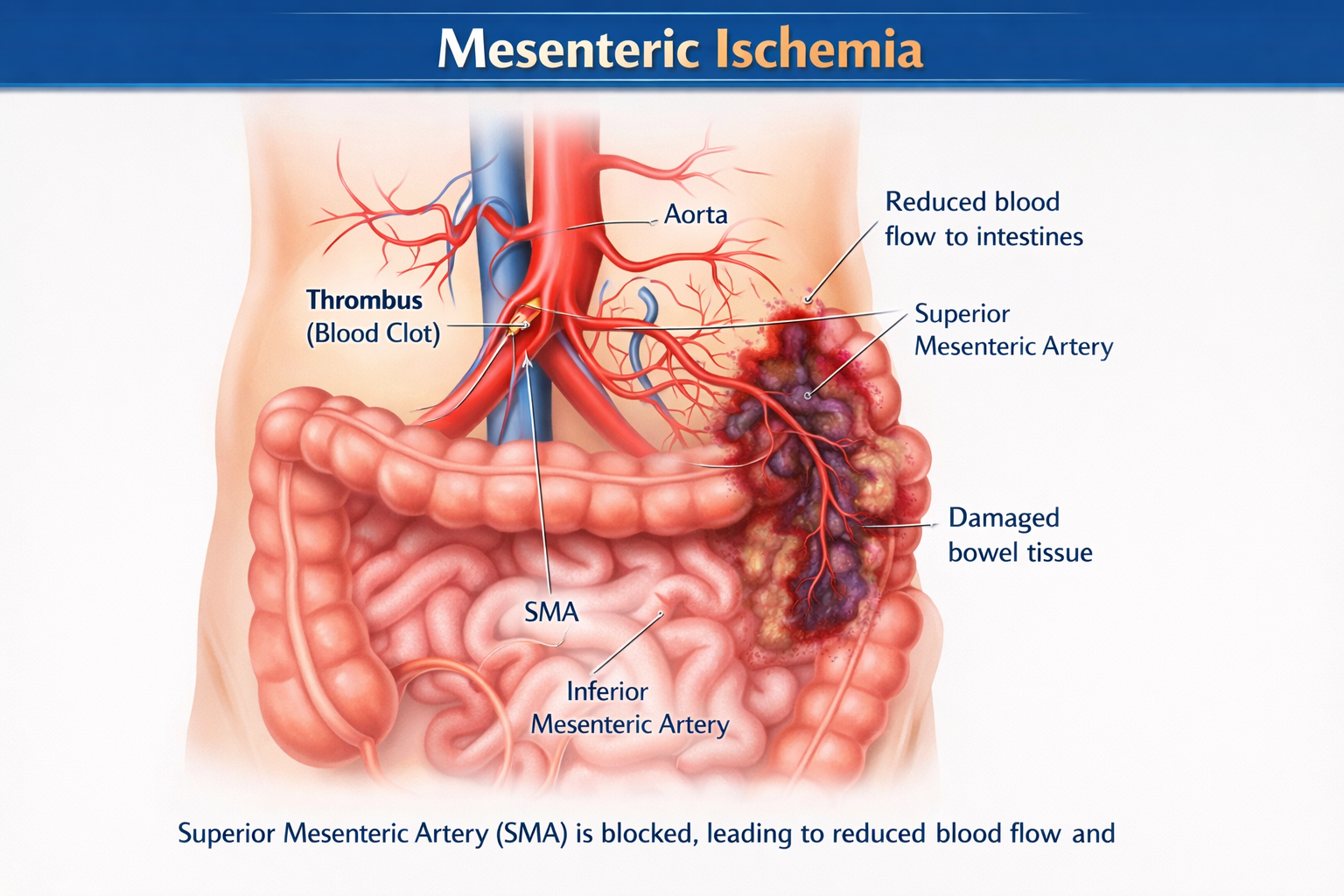
Mesenteric Ischemia: Understanding Insufficient Blood Flow to the Intestines
Mesenteric ischemia is a serious condition where there is a reduction in blood flow to the intestines, leading to insufficient oxygen and nutrients reaching the gastrointestinal tract. This condition can result from either a blockage in the blood vessels (arteries) or a decrease in blood supply due to other factors, such as low blood pressure.
Mesenteric ischemia can be acute or chronic and requires prompt medical attention to prevent severe complications like bowel death, perforation, or sepsis.
Types of Mesenteric Ischemia
- Acute Mesenteric Ischemia (AMI): A sudden reduction in blood flow, typically caused by a blood clot or embolism, leading to severe abdominal pain and potentially life-threatening consequences.
- Chronic Mesenteric Ischemia (CMI): A gradual reduction in blood flow to the intestines, usually due to atherosclerosis (plaque buildup in the arteries), which leads to recurring abdominal pain, especially after eating.
Why is Mesenteric Ischemia Important?
Mesenteric ischemia is important to diagnose and treat due to the potential for:
- Severe abdominal pain and discomfort, often described as cramp-like or constant.
- Complications: If untreated, it can lead to bowel necrosis (tissue death), perforation, and even sepsis, which can be fatal.
- Reduced quality of life: Chronic ischemia causes recurrent pain, especially after meals, leading to weight loss, malnutrition, and avoidance of eating.
Causes and Risk Factors for Mesenteric Ischemia
- Atherosclerosis: The buildup of plaque in the arteries, narrowing blood vessels and reducing blood flow, is the most common cause of chronic mesenteric ischemia.
- Blood Clots (Embolism): These can block the arteries that supply blood to the intestines, causing acute mesenteric ischemia.
- Low Blood Pressure: Decreased blood pressure from shock, dehydration, or heart failure can reduce blood flow to the mesenteric arteries.
- Arterial Thrombosis: A clot that forms in the arteries, typically in people with existing heart or vascular diseases, can lead to AMI.
- Vasculitis: Inflammation of the blood vessels, often associated with autoimmune diseases, can contribute to reduced blood flow to the intestines.
- Age and Lifestyle Factors: People over 60, especially those with diabetes, high cholesterol, and a history of smoking or obesity, are at higher risk for atherosclerosis and mesenteric ischemia.
Symptoms of Mesenteric Ischemia
- Abdominal Pain: Sudden, severe pain in the abdomen, which can worsen after eating (especially in chronic ischemia).
- Nausea and Vomiting: Common symptoms, especially in acute ischemia.
- Diarrhea or Bloody Stools: In severe cases, the affected intestines may bleed, leading to diarrhea or bloody stools.
- Weight Loss: Unintentional weight loss, especially in chronic mesenteric ischemia, due to avoidance of food due to pain.
- Malnutrition: Chronic mesenteric ischemia can lead to malnutrition due to insufficient nutrient absorption.
- Painful Bloated Abdomen: A bloated feeling, especially after meals, due to lack of proper blood flow and digestion.
Diagnosing Mesenteric Ischemia
- Physical Examination: A doctor may palpate the abdomen to assess tenderness, bloating, or other signs of ischemia.
- CT or MR Angiography: Advanced imaging techniques that can detect blockages or narrowing in the mesenteric arteries.
- Doppler Ultrasound: Used to assess blood flow through the mesenteric arteries and detect any blockages.
- Angiography: An invasive test where a dye is injected into the arteries to visualize blood flow to the intestines.
- Blood Tests: Elevated levels of lactate or other markers can indicate tissue injury due to poor blood supply.
- Endoscopy or Colonoscopy: These may be used to check for signs of bowel damage or bleeding in severe cases.
Treatment Options for Mesenteric Ischemia
- Acute Mesenteric Ischemia (AMI):
- Emergency Surgery: To remove the clot or blockage causing the ischemia, restoring blood flow to the intestines.
- Thrombolysis: Use of medications to dissolve the clot and restore blood flow.
- Endovascular Procedures: Minimally invasive procedures, such as balloon angioplasty or stenting, to open blocked arteries.
- Chronic Mesenteric Ischemia (CMI):
- Lifestyle Changes: Smoking cessation, weight loss, and dietary changes to manage underlying risk factors like atherosclerosis.
- Medications: Blood thinners, statins, and medications to control cholesterol and high blood pressure.
- Surgical Bypass: Bypassing the blocked arteries to restore adequate blood flow to the intestines.
- Angioplasty and Stenting: Minimally invasive procedures to open narrowed arteries and improve circulation.
Preventing Mesenteric Ischemia
- Control Risk Factors: Properly manage diabetes, high blood pressure, and cholesterol levels.
- Quit Smoking: Smoking cessation is crucial in preventing atherosclerosis and improving overall vascular health.
- Healthy Diet: A balanced diet low in saturated fats and high in fruits, vegetables, and fiber can help reduce the risk of plaque buildup in the arteries.
- Regular Exercise: Engaging in regular physical activity can improve circulation and reduce cardiovascular risk.
- Regular Monitoring: For those at risk, especially older adults or individuals with a history of heart disease, regular check-ups and imaging tests may help detect early signs of ischemia.
Why Choose Dr. Gnanadev N C for Mesenteric Ischemia Diagnosis and Treatment?
Dr. Gnanadev N C offers advanced diagnostic techniques and treatment options for mesenteric ischemia. With expertise in managing both acute and chronic ischemia, Dr. Gnanadev provides tailored treatment plans to restore blood flow, prevent further complications, and improve patient outcomes. Whether for emergency intervention or long-term management, you will receive expert care and support every step of the way.