
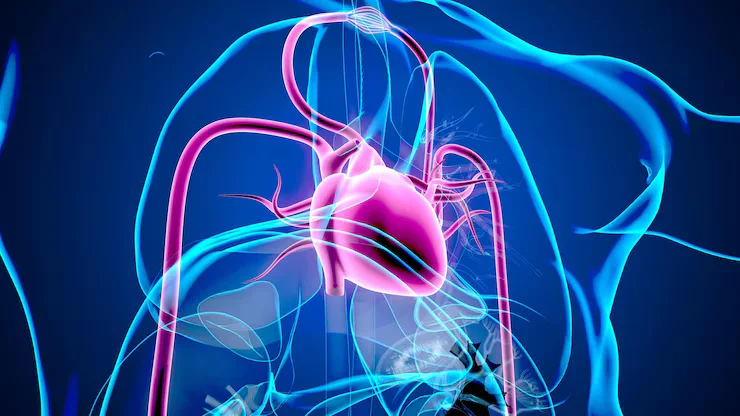
IVC Filter

IVC Filter: Preventing Dangerous Blood Clots from Reaching the Lungs

An IVC (Inferior Vena Cava) Filter is a small, cage-like medical device placed in the inferior vena cava—the large vein that carries blood from the lower body to the heart. The filter is designed to trap blood clots before they travel to the lungs, where they can cause a life-threatening condition known as Pulmonary Embolism.

IVC filters are typically used in patients with Deep Vein Thrombosis who cannot take blood-thinning medications or are at high risk of clot migration.

Why is an IVC Filter Recommended?

An IVC filter may be recommended if you have:

  • Deep Vein Thrombosis (DVT) with risk of clot travel
  • Pulmonary Embolism (PE) or high risk of recurrence
  • Inability to take anticoagulant medications due to bleeding risk
  • Failure of blood thinners to prevent clot formation
  • Major surgery or trauma with increased clot risk
  • Recurrent blood clots despite treatment
Conditions Managed with IVC Filter
  • Deep Vein Thrombosis (DVT): Clots forming in deep veins, usually in the legs
  • Pulmonary Embolism (PE): Clots traveling to the lungs and blocking blood flow
  • Venous Thromboembolism (VTE): Combined condition involving DVT and PE
  • High-Risk Surgical Cases: Temporary protection during or after major procedures
Types of IVC Filters
  • Permanent IVC Filters: Designed to remain in the body long-term
  • Retrievable (Temporary) IVC Filters: Can be removed once the risk of clot migration decreases
  • Convertible Filters: Devices that can be modified or retrieved depending on patient condition
What Happens During the Procedure?
  1. Preparation: The procedure is performed under local anesthesia
  2. Catheter Insertion: A catheter is inserted through a vein in the neck or groin
  3. Filter Placement: The filter is guided into the inferior vena cava using imaging
  4. Deployment: The filter expands and attaches to the vein walls
  5. Completion: The catheter is removed, and the site is bandaged

The procedure usually takes less than an hour, and patients can often return home the same day.

Benefits of IVC Filter
  • Prevents life-threatening pulmonary embolism
  • Minimally invasive with quick recovery
  • Provides protection when blood thinners cannot be used
  • Can be temporary or permanent depending on patient needs
  • Improves safety during high-risk medical conditions
Risks and Considerations
  • Filter migration or movement (rare)
  • Clot formation around the filter
  • Vein blockage over time
  • Difficulty in removing temporary filters if delayed
  • Need for regular follow-up imaging
Recovery After IVC Filter Placement
  • Most patients resume normal activities within 24–48 hours
  • Follow-up imaging is required to check filter position and function
  • Anticoagulant therapy may be restarted if safe
  • Temporary filters should be removed when no longer needed
  • Lifestyle changes to prevent clot formation are important
Why Choose Dr. Gnanadev N C for IVC Filter Placement?

Dr. Gnanadev N C offers expert care in the management of blood clot disorders, including IVC filter placement and removal. With extensive experience in minimally invasive vascular procedures, he ensures safe, precise, and effective treatment.

Patients receive individualized care, advanced imaging-guided procedures, and comprehensive follow-up to reduce the risk of complications and ensure long-term vascular health.

Get in Touch for Expert Heart Care

Contact us for timely diagnosis, expert guidance, and compassionate heart care.