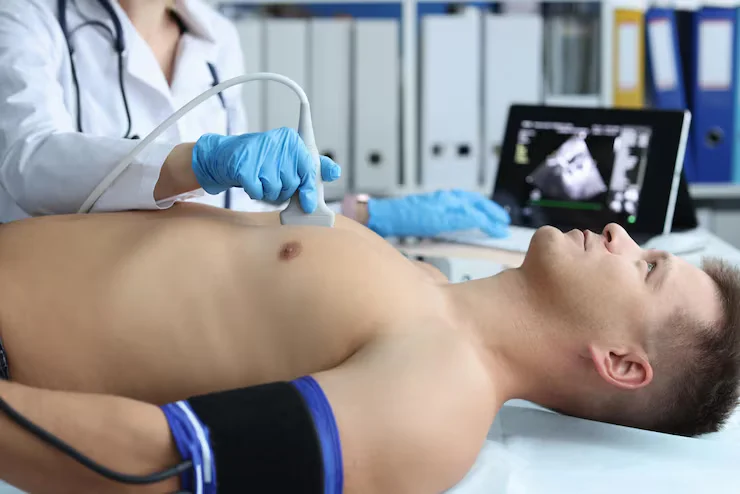
Echocardiography (ECHO): Detailed Heart Imaging for Accurate Diagnosis
Echocardiography (ECHO) is a non-invasive imaging test that uses sound waves (ultrasound) to create detailed pictures of the heart. It provides a real-time view of the heart’s size, shape, and movement, helping doctors assess the heart’s function and diagnose various heart conditions.
ECHO is an essential tool for detecting heart diseases, including valve disorders, heart failure, and congenital heart defects. It is a painless procedure that offers valuable insights into how your heart is working.
If you are experiencing symptoms like shortness of breath, chest pain, dizziness, or swelling in the legs, ECHO can help in identifying the underlying cause and guide the right treatment plan.
Why is an ECHO Recommended?
An ECHO may be recommended if you are experiencing:
- Shortness of breath or difficulty breathing
- Chest pain or discomfort
- Swelling in the legs, ankles, or feet
- Dizziness or fainting
- Unexplained fatigue
- Irregular heartbeat or palpitations
- High blood pressure or family history of heart disease
- Suspected valve issues or heart failure
An ECHO is also often performed during a routine heart check-up or as part of the diagnosis for patients with known heart conditions.
Conditions Diagnosed with an ECHO
- Heart Valve Problems: ECHO can identify issues such as valve stenosis (narrowing) or regurgitation (leakage).
- Heart Failure: It helps assess the heart’s pumping efficiency and detect fluid accumulation in the lungs or other areas.
- Cardiomyopathy: ECHO can reveal abnormalities in the heart muscle, such as thickening or weakening.
- Congenital Heart Defects: The test can detect abnormalities in the heart’s structure present at birth.
- Pericardial Disease: ECHO is useful in detecting inflammation or fluid buildup around the heart.
- Aneurysms: It helps in detecting weak spots in the heart wall, such as in the aorta.
Types of Echocardiography Tests
- Transthoracic Echocardiogram (TTE): The most common type of ECHO, where a probe is placed on the chest to capture heart images.
- Transesophageal Echocardiogram (TEE): A specialized ECHO test where a probe is inserted into the esophagus to get a closer view of the heart.
- Stress Echocardiogram: This test combines ECHO imaging with physical activity (like treadmill exercise) or medication to assess heart function under stress.
- Doppler Echocardiogram: This test measures the speed and direction of blood flow within the heart to detect valve problems or blockages.
What Happens During the Procedure?
- Preparation: You will be asked to lie down on an examination table. Electrodes may be attached to your chest to monitor your heart’s activity.
- Probe Application: A gel is applied to your chest, and a small, handheld device called a transducer is moved over your chest to capture images of the heart.
- Image Recording: The transducer emits high-frequency sound waves, which bounce off the heart to create images. The test usually lasts between 30 to 60 minutes.
- Painless and Non-invasive: The procedure is painless and doesn’t require any incisions. You can return to your normal activities immediately after the procedure.
Benefits of ECHO Testing
Echocardiography offers the following benefits:
- It is a non-invasive and safe procedure.
- It provides real-time, detailed images of the heart.
- It helps in early diagnosis of heart conditions.
- ECHO is useful in monitoring the effectiveness of treatment for heart disease.
- The test has no radiation exposure.
Why Choose Dr. Gnanadev N C for ECHO Evaluation?
Dr. Gnanadev N C offers advanced echocardiography services, ensuring detailed and accurate heart assessments. With years of expertise, Dr. Gnanadev provides a comprehensive review of ECHO results and recommends personalized treatment plans. Whether you’re undergoing routine monitoring or require an in-depth diagnosis, you will receive expert care and precise heart evaluations every step of the way.