
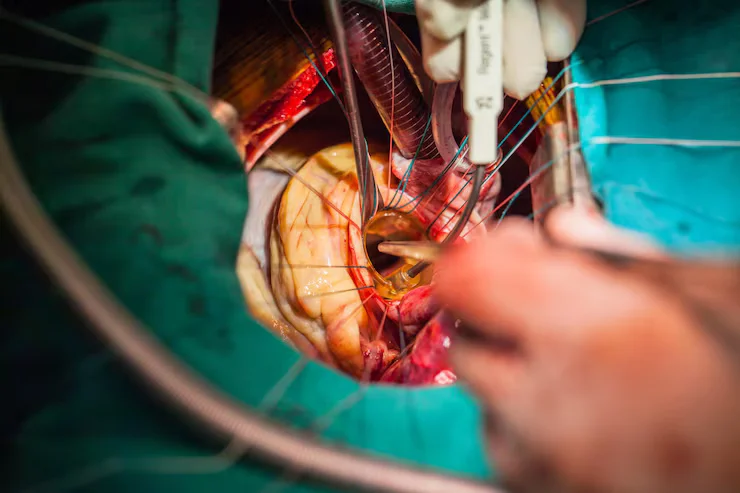
IVUS / OCT Guided Coronary Angioplasty

IVUS / OCT Guided Coronary Angioplasty: Advanced Imaging Techniques for Precision Treatment

Intravascular Ultrasound (IVUS) and Optical Coherence Tomography (OCT) are advanced imaging techniques used to guide coronary angioplasty (PCI) procedures. These technologies provide real-time, high-resolution images of the inside of coronary arteries, allowing cardiologists to assess the size, shape, and characteristics of blockages or plaques with greater accuracy than traditional angiography alone. Both IVUS and OCT help optimize stent placement, ensuring better outcomes for patients undergoing coronary angioplasty.

These imaging techniques are particularly useful in complex cases where the anatomy is challenging or where precise treatment is essential to prevent complications.

Why is IVUS / OCT Guided Coronary Angioplasty Important?

Using IVUS or OCT in coronary angioplasty is important because:

  • Improved Accuracy: IVUS and OCT provide detailed, high-resolution images of the coronary arteries, allowing for better assessment of blockages, plaque characteristics, and artery sizes.
  • Better Stent Placement: These imaging techniques allow for more precise placement of stents, improving the effectiveness of the procedure and reducing the risk of restenosis (re-narrowing of the artery).
  • Minimizing Complications: By accurately measuring plaque and artery size, IVUS and OCT help reduce complications, such as stent underexpansion or vessel dissection, which may occur with traditional angiography.
  • Optimizing Treatment Outcomes: Real-time imaging helps guide the procedure, ensuring the best possible result for patients and improving long-term heart health.
Indications for IVUS / OCT Guided Coronary Angioplasty

IVUS and OCT are particularly useful in the following scenarios:

  • Complex Coronary Artery Disease: When blockages or plaques are difficult to visualize using traditional angiography due to their size, location, or other challenging factors.
  • Bifurcation Lesions: In cases where blockages occur at the branch points of arteries, IVUS and OCT can guide precise stent placement to ensure both branches of the artery are adequately treated.
  • Long Lesions: In patients with long coronary artery blockages, these imaging techniques provide a more accurate assessment of the lesion’s length and location, aiding in stent sizing and placement.
  • Heavily Calcified Lesions: In arteries with significant calcification, IVUS and OCT can help assess the severity of the calcification, ensuring that stents are properly expanded.
  • Stent Optimization: After stent placement, IVUS or OCT can be used to assess the stent’s expansion and apposition (fit against the vessel wall) to ensure optimal results.
How is IVUS / OCT Guided Coronary Angioplasty Performed?

The process of IVUS and OCT guided coronary angioplasty involves the following steps:

  • Preparation: The patient is given a mild sedative and local anesthesia at the insertion site (typically the groin or wrist). The procedure is performed in a catheterization lab (cath lab).
  • Catheter Insertion: A catheter, which houses the IVUS or OCT imaging device, is inserted into the artery and guided to the coronary arteries under the guidance of X-ray (fluoroscopy).
  • IVUS / OCT Imaging:
    • IVUS: A small ultrasound probe at the tip of the catheter emits high-frequency sound waves to create detailed images of the coronary arteries from the inside.
    • OCT: This technique uses light waves instead of sound waves, providing even higher resolution images that allow for precise visualization of the artery walls and plaques.
  • Assessment: The images generated by IVUS or OCT help the cardiologist assess the artery’s condition, measure the size of the blockage, and determine the most appropriate course of action.
  • Balloon Angioplasty: If a blockage is detected, a balloon catheter is used to widen the narrowed artery, and a stent may be placed to keep the artery open.
  • Stent Optimization: After stent placement, the IVUS or OCT imaging is used again to ensure that the stent is properly expanded and securely positioned.
Advantages of IVUS / OCT Guided Coronary Angioplasty
  • Higher Resolution Images: OCT provides better resolution than IVUS, offering a clearer view of the artery’s interior and plaque characteristics.
  • Precise Stent Sizing and Placement: Accurate measurements and visualization of plaques help the cardiologist select the correct size and type of stent, ensuring better results.
  • Reduced Risk of Restenosis: By ensuring proper stent expansion and positioning, IVUS and OCT reduce the risk of restenosis, which is a common complication in traditional angioplasty procedures.
  • Better Outcome in Complex Cases: These techniques are particularly useful in complex cases such as bifurcation or heavily calcified lesions, where traditional angiography alone may not provide sufficient information.
Risks and Complications of IVUS / OCT Guided Coronary Angioplasty

While IVUS and OCT guided angioplasty are generally safe, there are some potential risks and complications:

  • Bleeding: At the catheter insertion site, particularly if blood-thinning medications are used.
  • Infection: As with any invasive procedure, there is a risk of infection at the insertion site.
  • Contrast Dye Reactions: The contrast dye used during the procedure can cause allergic reactions or kidney damage, particularly in individuals with pre-existing kidney conditions.
  • Vessel Injury: In rare cases, the catheter or balloon can cause injury to the artery, leading to dissection or rupture.
  • Radiation Exposure: Although the procedure uses X-ray for imaging, the exposure is typically low, but prolonged or repeated exposure may increase risks.
Post-Procedure Care for IVUS / OCT Guided Coronary Angioplasty

After the procedure, patients are typically monitored for a few hours to ensure there are no immediate complications. Post-procedure care includes:

  • Medications: Antiplatelet drugs, such as aspirin and clopidogrel, are prescribed to prevent blood clots from forming around the stent.
  • Lifestyle Modifications: Adopting a heart-healthy diet, exercising regularly, quitting smoking, and reducing alcohol intake are important for long-term heart health.
  • Follow-up Appointments: Regular visits to the cardiologist for monitoring heart function, managing medications, and ensuring stent patency.
  • Physical Activity: Gradual resumption of normal activities is encouraged, based on the patient’s condition and doctor’s recommendations.
Preventing the Need for Future Angioplasty

To reduce the likelihood of future coronary artery blockages or the need for repeated angioplasty procedures:

  • Control Risk Factors: Manage high blood pressure, diabetes, and cholesterol levels through lifestyle changes and medications.
  • Healthy Diet: A diet low in saturated fats, cholesterol, and sodium while rich in fruits, vegetables, and whole grains helps prevent atherosclerosis.
  • Regular Exercise: Physical activity strengthens the heart and improves circulation, reducing the risk of further blockages.
  • Quit Smoking: Smoking accelerates the development of atherosclerosis and raises the risk of heart disease.
  • Regular Health Screenings: Routine monitoring of heart health, cholesterol, and blood pressure can help detect problems early and prevent further complications.
Why Choose Dr. Gnanadev N C for IVUS / OCT Guided Coronary Angioplasty?

Dr. Gnanadev N C specializes in the diagnosis and treatment of coronary artery disease using advanced techniques such as IVUS and OCT-guided coronary angioplasty. With expertise in managing complex cases, Dr. Gnanadev provides personalized care that optimizes treatment outcomes. Whether for a routine procedure or a more complex case, you will receive expert, compassionate care every step of the way.

Get in Touch for Expert Heart Care

Contact us for timely diagnosis, expert guidance, and compassionate heart care.